AMID THE POWERFUL conformist currents of midtown Manhattan, there is something unexpected about Myron Magnet’s sideburns — bushy white whiskers that billow out from his bespectacled face like something out of Dickens. Continue reading →
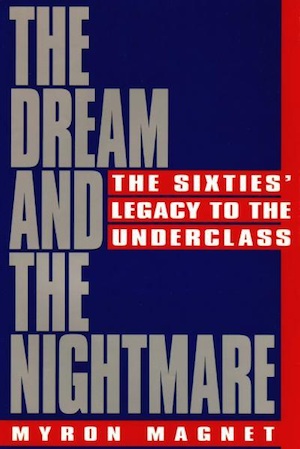
Myron Magnet’s The Dream and the Nightmare argues that the radical transformation of American culture that took place in the 1960s brought today’s underclass — overwhelmingly urban, dismayingly minority — into existence. Lifestyle experimentation among the white middle class produced often catastrophic changes in attitudes toward marriage and parenting, the work ethic and dependency in those at the bottom of the social ladder, and closed down their exits to the middle class. Continue reading →
EVERYONE KNOWS how vastly it has been transformed, but we are just learning how profoundly disturbing the implications are for kids — and for American society. Continue reading →
AMERICA has churned out record new employment for six years. With most workers doing fine, new efforts to protect them are just what isn’t needed. Continue reading →
DEINDUSTRIALIZATION? ECONOMIC VIOLENCE? The heartland says humbug. When the going got tough, its industries shaped up. Now they’re more competitive than ever. Continue reading →
DEEPLY DISTURBED AND ENSHROUDED BY MYTH, many are victims of alcohol, family breakdown — and well-intentioned social policies gone awry. Most need more than housing to solve their problems. Continue reading →
HOW MUCH DOES HE MAKE? How big was the deal? What did they pay for their house … their boat … their painting? Money seems to be the only thing that counts these days. Here’s why. Continue reading →
DRUGS. CRIME. Illegitimacy. Welfare. Failure. All these imprison five million citizens. But some imaginative policies can liberate them. Continue reading →
CUTBACKS, SPINOFFS, AND BUYOUTS bring pain — but the gains are worth it. Says a veteran: “It’s like going into a pet shop and opening the bird cages and letting out the birds.” Continue reading →
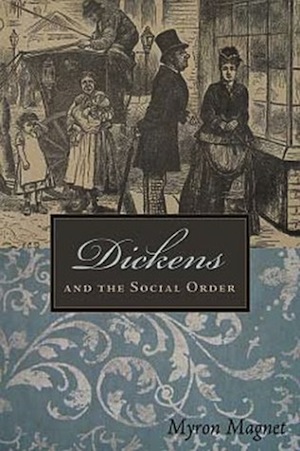
“One of the most stimulating studies of Dickens to have appeared in recent years.” — New York Times
Myron Magnet’s groundbreaking study of Charles Dickens’s early novels shows that the liberal reformism for which Dickens is so well known rested on a surprisingly traditional view of society.
Magnet writes, “The four great but relatively neglected works I discuss in Dickens and the Social Order … add up to what for another writer would constitute a magnificent life’s work in itself, a tour de force that is like a university education in psychology, political theory, comparative political science, cultural anthropology, sociology, history, philosophy, and more — all transfigured and illuminated by the genius of the writer rightly said to be Inimitable, so that the reader can hardly believe that anything so full of pleasure can also be so full of wisdom.” Continue reading →